
Tips
The Agentic Shift: What Google’s Disco Experiment Really Means for Your Business
If Google’s Disco succeeds, customers may stop “searching” and start delegating decisions to AI. This article explores what that means for how your business gets discovered—and what founders must change to stay visible when AI controls the interface.
For nearly two decades, the implicit contract between Google and your business was straightforward:
You create content. Google ranks links. Users click through to your site to research, compare, and transact.
That model is no longer guaranteed.
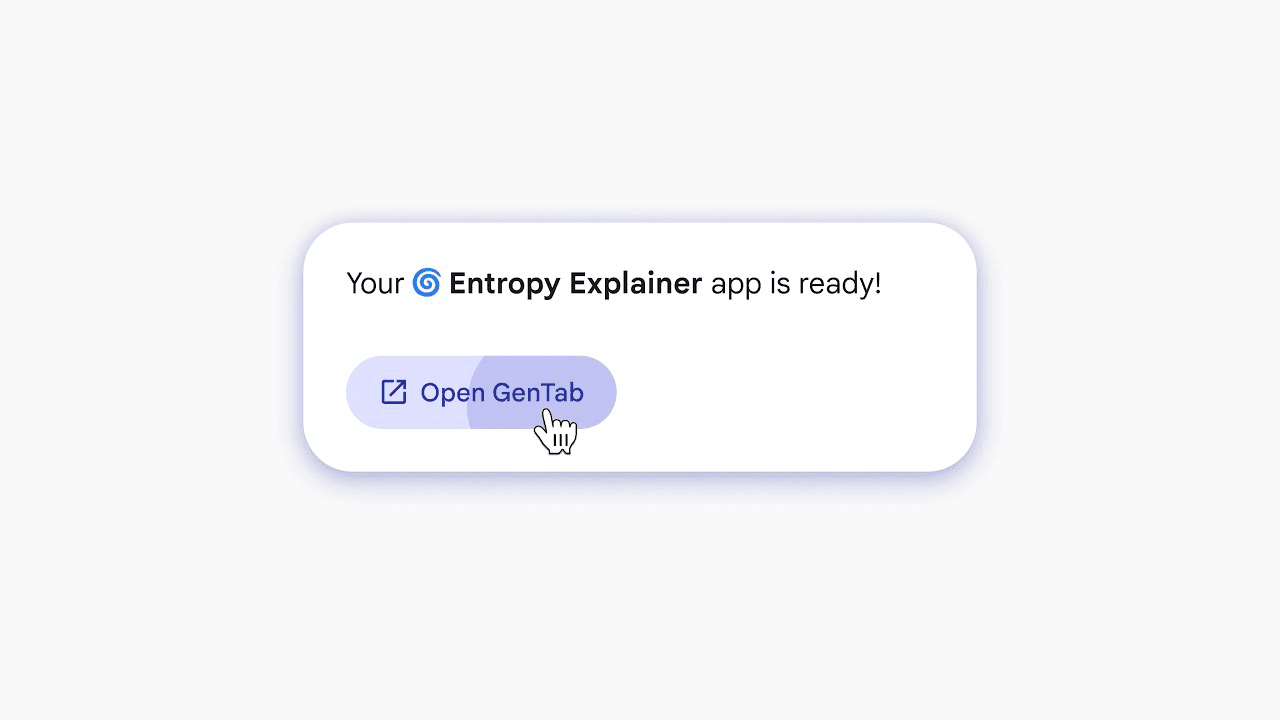
With the launch of Project Disco—an experimental AI-powered browser from Google Labs—and its associated GenTabs feature, Google is actively testing a different way for users to interact with the web: one where information is not just retrieved, but assembled into task-specific interfaces.
This is not the end of websites. It is not the death of SEO.
But it is the clearest signal yet that Google is exploring a future where execution increasingly happens inside AI-generated interfaces, rather than exclusively on destination pages.
For small and medium businesses, this shift introduces real risk—and a meaningful opportunity.
From Retrieval to Generative Interfaces
To understand the implications, it’s important to be precise about what Disco actually does today.
Project Disco is an experimental browser that uses Google’s Gemini 3 model to analyze a user’s open tabs and inferred intent, then generate a GenTab—a temporary, task-oriented interface designed to help the user accomplish something specific. Google outlines this capability as part of its broader Gemini platform and agentic research efforts (Gemini overview).
For example, instead of returning a traditional list of links for a query like “plan a trip to Tokyo,” Disco may generate a planning interface that synthesizes information from multiple open tabs—highlighting routes, comparisons, or options in one place. Google has described this GenTabs system as a way to turn browsing context into task-focused views (GenTabs in Google Labs).
A few things matter here:
- GenTabs are grounded in real web sources
- Original source pages remain visible and linked for verification
- Disco is experimental, not a replacement for Google Search What’s new is not summarization. It’s the interface model.
As independent coverage has noted, Disco effectively turns collections of tabs into mini applications, reframing how users interact with information (Android Central coverage).
Why This Matters: The Interface Is Becoming the Product
In Disco’s model, the user’s primary interaction increasingly happens inside a Generative User Interface—not a homepage, not a blog post, not a traditional funnel.
That changes the competitive surface.
If your business relies on users navigating multiple layers of UI to understand what you offer, your content becomes harder for AI-generated interfaces to incorporate cleanly. By contrast, businesses with clear structure, accessible data, and explicit signals are easier for systems like Gemini to interpret and reference accurately.
This is no longer just about ranking. It’s about being usable by AI systems that assemble answers on the user’s behalf.
As The Verge summarized, Disco reflects a broader shift toward AI-mediated browsing experiences rather than link-first navigation (The Verge on Google’s Disco browser).
The New Battleground: Source Grounding, Not Page Rankings
One of the most important design choices in Disco is its emphasis on source grounding.
GenTabs frequently operate alongside the original source pages they reference. This aligns with Google’s stated priority of reducing hallucinations by anchoring AI outputs to verifiable data, a core principle of its Responsible AI framework.
For businesses, that reframes competition:
You are no longer optimizing only for clicks. You are optimizing to be trusted, structured, and referenced.
If your information is ambiguous, inconsistent, or poorly structured, AI systems are less likely to rely on it—not because it’s “bad SEO,” but because it’s harder to ground.
Optimizing for Agentic Systems (Without Abandoning Humans)
This shift doesn’t invalidate best practices. It raises the bar.
1. Structured Access to Your Core Data
Static pages still matter—but machine-readable structure matters more.
If you operate a booking, scheduling, or e-commerce business, exposing inventory, availability, and pricing through structured feeds, APIs, or well-defined schema reduces friction between user intent and your data.
This doesn’t mean “build an API or disappear.” It means removing unnecessary ambiguity between what you offer and how systems interpret it.
2. Human Signal Still Matters—More Than Ever
As AI-generated content becomes more prevalent across the web, Google has consistently emphasized E-E-A-T (Experience, Expertise, Authoritativeness, Trustworthiness).
There is no confirmed “anti-AI” update—but Google has been explicit that low-quality, generic, or mass-produced content is less valuable to users and riskier for training reliable models. This position has been reiterated across Google Search Central updates, including recent core updates (Google Search Central Blog).
Original insight, first-party data, lived experience, and defensible opinions still matter. Content that looks interchangeable is easier for machines to summarize—and easier to ignore.
3. Structured Data Is Becoming Infrastructure
Schema markup has long been recommended. In an agentic web, it starts to function like infrastructure.
Clearly defining what you offer—products, services, pricing, availability, reviews—reduces guesswork for both search engines and AI systems.
When AI-generated interfaces assemble task-specific views, they favor sources they can understand without inference.
The Opportunity: Becoming a Preferred Source
Here’s the upside.
Experimental systems like Disco tend to favor clean, well-structured, trustworthy sources. Many businesses are still optimizing for browsing patterns from five years ago.
Those who adapt early—by treating their digital presence as both a human interface and a machine-readable system—can gain disproportionate visibility as AI-driven interfaces mature.
We are not leaving the Search Economy overnight. But we are clearly moving toward an agent-assisted economy, where machines increasingly mediate discovery, comparison, and recommendation.
The competitive edge in that world won’t come from traffic alone. It will come from being the system AI agents rely on when users act.
What to Do Next
There’s no need to panic—but there is a need to get organized.
Messy data, unclear offerings, and opaque site structures are liabilities in a world where AI systems increasingly assemble answers for users.
LogicFox designs agent-ready digital architecture. We help businesses structure their data, content, and systems so modern AI platforms—including systems built on models like Gemini—can reliably understand, reference, and trust them.
If you want to understand how your business appears to AI systems today, we offer an Agent Readiness Diagnostic—a technical review of how machine-interpretable your digital presence actually is.
Is your business ready for the agentic web?