Replacing a Patchwork of Tools with One AI-Powered CRM and Automation System
Scene3D, a UK 3D-visualisation studio, replaced a fragile patchwork of spreadsheets and Zapier automations with a single, self-hosted CRM and an n8n automation layer — unifying ~1,480 records and automating the work that used to eat their week.
- Records unified in one CRM
- 1,480
- Subscription renewals in one book
- 1,337
- AI updates applied — all reversible
- 511
One system instead of a dozen
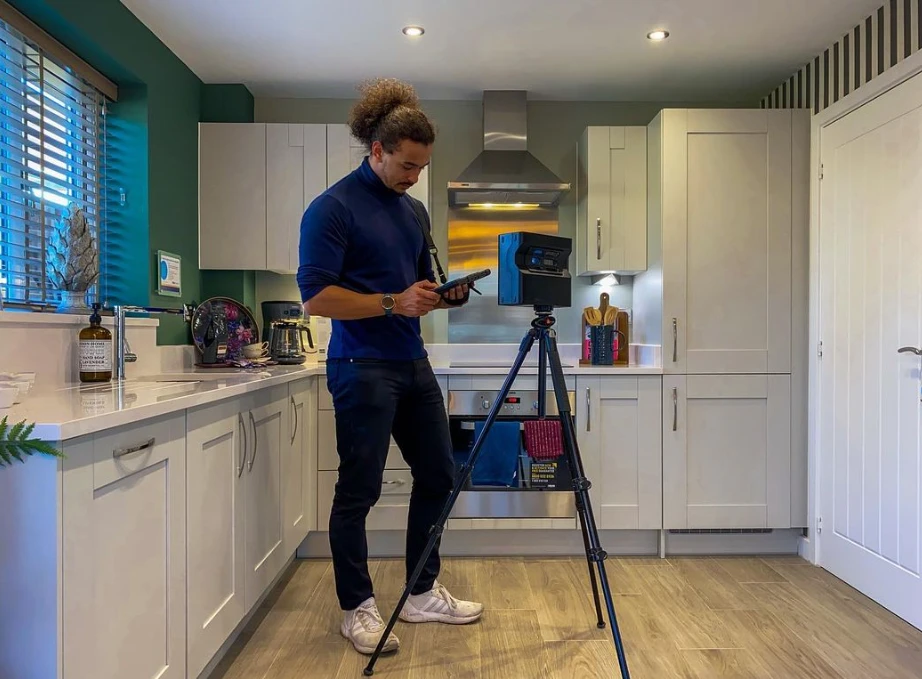
Scene3D produces high-end 3D visualisations and virtual tours for the property and architecture sectors. The creative work was excellent — but the business running underneath it was held together by spreadsheets, email threads, and a growing stack of Zapier automations that broke quietly and were expensive to change.
LogicFox was brought in to replace that patchwork with one connected system: a single self-hosted CRM as the source of truth, and an automation layer that handles lead intake, pipeline tracking, and the recurring billing operations that were swallowing the team's time.

Fragmented data and brittle automation
The symptoms were familiar for a studio that had grown faster than its tooling:
- Fragmented data: leads, projects, and customers lived across forms, spreadsheets, and inboxes, with no single record anyone could trust.
- Brittle automation: dozens of Zaps glued the tools together. Each change was risky, failures were silent, and per-task pricing scaled the wrong way.
- Manual billing grind: annual hosting renewals for hundreds of customers were invoiced by hand, one at a time.
- No clear pipeline: without a shared view of opportunities and their status, forecasting and follow-up were guesswork.
How do we get off a patchwork of spreadsheets and brittle Zaps before it caps our growth?
Our approach
We rebuilt the operational core around two decisions: one canonical CRM, and an automation engine the business actually owns.
1. A single source of truth (Twenty CRM)
We stood up a self-hosted Twenty CRM as the system of record and migrated the studio's full history into it — roughly 1,480 records of companies, people, opportunities, and projects — joined across the old systems on a stable Project ID so nothing was double-counted or lost. Records flow in automatically from the team's day-to-day email and calendar activity, so the CRM stays current without manual data entry.
2. Automation the business owns (n8n)
The studio's automation — an 18-workflow Zapier estate, all of it running on one person's login — was re-engineered onto self-hosted n8n. Lead routing, enrichment, follow-up sequences, and status updates now run on an engine with no per-task pricing and full version control, with human-in-the-loop approval kept exactly where the team wants a person in the loop.
3. Lead intake and a real pipeline
Inbound enquiries are captured, enriched, and routed into a clear, multi-stage opportunity pipeline, so the team can see what's live, what's waiting on a response, and what's ready to deliver — so no enquiry waits unnoticed in a shared inbox.
4. Automated recurring billing
The studio's biggest blind spot — a book of 1,337 annual hosting renewals scattered across spreadsheets — became first-class records in the CRM: a legible renewal book reconciled against the studio's accounting system, with a billing review queue that flags finished-but-unbilled work instead of relying on memory.
One connected system, owned by the team
Scene3D now runs on one CRM and one automation layer they control — not a dozen tools and a wall of Zaps. The records are unified, the recurring billing runs itself, and the pipeline is finally visible. Just as importantly, the system is theirs: self-hosted, version-controlled, and built to extend as the studio grows rather than to lock them in.
Live site: scene-3d.co.uk